
Introduction
For many people in India, a two-wheeler is more than just a vehicle. It is a daily travel companion that helps them reach work, manage household responsibilities, attend college, and travel around the city. Whether you own a motorcycle or a scooter, protecting it with the right bike insurance policy is an important part of responsible ownership.
However, when buying or renewing two-wheeler insurance, one common question often arises: Should you choose comprehensive bike insurance or third-party bike insurance?
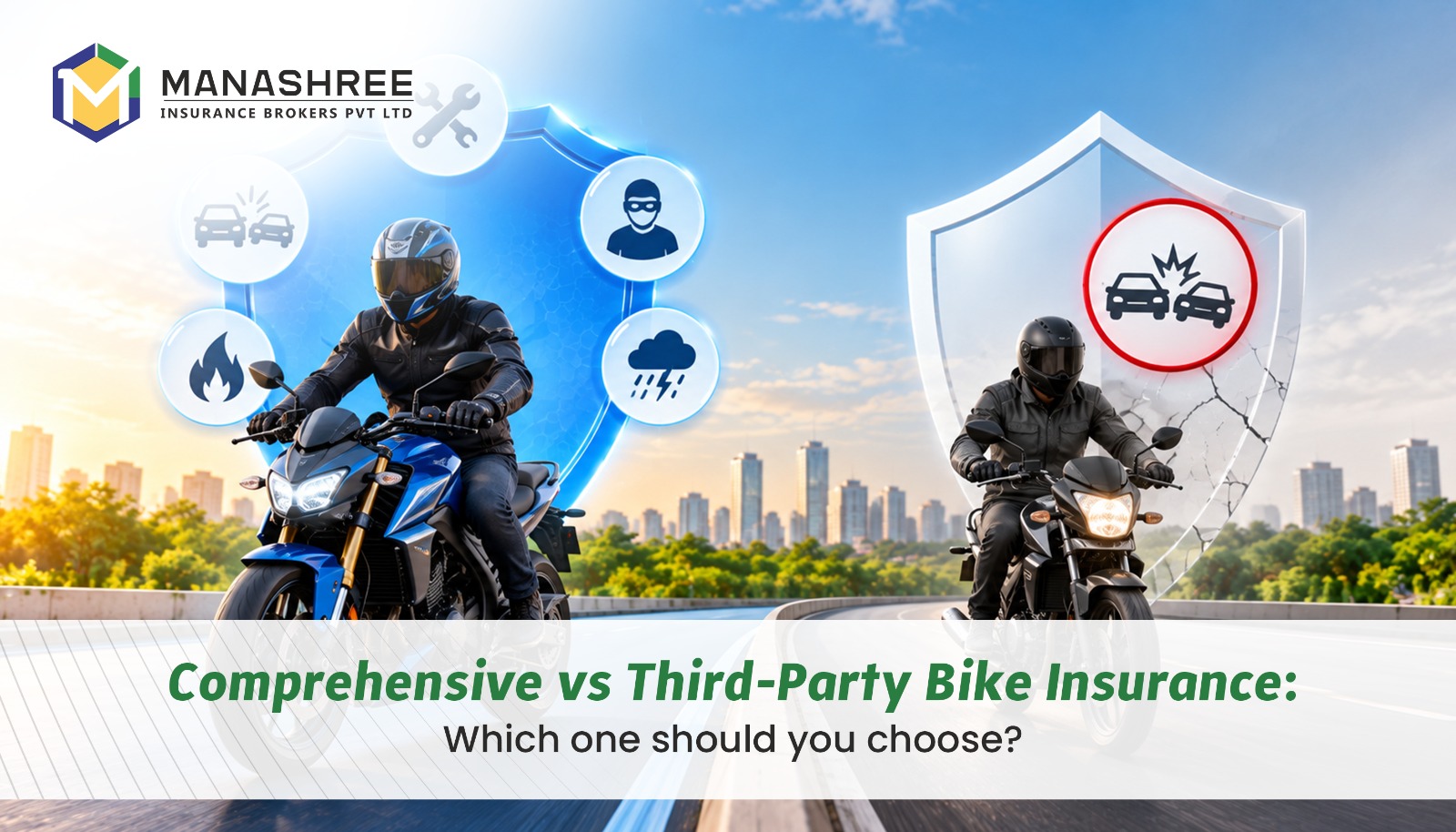
Both options serve different purposes. Third-party bike insurance provides protection against covered legal liabilities arising from injury, death, or property damage caused to another person. Comprehensive bike insurance generally combines third-party liability cover with protection against specified damage to your own vehicle.
The right choice depends on several factors, including your bike’s age, market value, daily usage, riding conditions, and budget.
In this guide, we explain the difference between comprehensive and third-party bike insurance, compare their benefits and limitations, and help you understand which option may suit your requirements. We also explore how Manashree Insurance can help you review your two-wheeler insurance options.
What Is Third-Party Bike Insurance?
Third-party bike insurance is the basic motor insurance cover required by law for two-wheelers used on public roads in India.
It protects you against eligible legal liabilities if your insured bike causes injury, death, or property damage to a third party, subject to the policy terms and applicable law.
For example, imagine you accidentally collide with another vehicle while riding your motorcycle. If the incident results in covered third-party liability, your insurance may respond according to the policy and legal requirements.
What Does Third-Party Bike Insurance Cover?
A standard third-party two-wheeler insurance policy generally provides:
- Third-party bodily injury liability: Eligible legal liability arising from injury to another person.
- Third-party death liability: Eligible legal liability arising from the death of a third party.
- Third-party property damage: Covered liability for damage caused to another person’s property, subject to applicable limits and policy terms.
This coverage can help protect you from certain financial liabilities arising from road accidents.
What Does Third-Party Bike Insurance Not Cover?
Third-party bike insurance generally does not cover:
- Damage to your own motorcycle or scooter.
- Theft of your own two-wheeler.
- Repairs following an accident involving your own vehicle.
- Damage caused by fire, floods, or other events affecting your bike.
These losses may be covered under an eligible own-damage or comprehensive policy, depending on its terms.
Who Should Consider Third-Party Bike Insurance?
Third-party insurance may suit riders who want the legally required liability protection at a relatively lower premium.
However, remember that a lower premium does not mean your own vehicle is protected. If your bike is damaged or stolen, you may need to bear the financial loss yourself.
What Is Comprehensive Bike Insurance?
Comprehensive bike insurance provides broader protection by combining third-party liability coverage with own-damage protection, subject to the policy terms, exclusions, and deductibles.
While third-party insurance focuses on liabilities towards others, comprehensive bike insurance can also help cover eligible losses involving your own motorcycle or scooter.
Depending on the policy, own-damage coverage may apply to events such as:
- Accidental damage.
- Fire and certain related incidents.
- Theft of the insured two-wheeler.
- Specified natural disasters, such as floods or storms.
- Certain man-made events covered under the policy.
The exact protection depends on the insurer’s policy wording.
Benefits of Comprehensive Bike Insurance
- Protection for your own vehicle
If your bike is damaged in a covered accident, the policy may help pay eligible repair costs after applicable deductions and deductibles.
- Coverage against theft
If your insured two-wheeler is stolen and the claim meets the policy conditions, the insurer may provide a settlement based on the applicable insured value and terms.
- Protection against specified natural events
Depending on your policy, covered damage caused by events such as flooding, storms, or other natural disasters may be included.
- Optional add-on benefits
Some insurers offer additional covers, such as zero depreciation, roadside assistance, or return to invoice, subject to vehicle eligibility and policy conditions.
- Greater financial protection
Repairing a damaged motorcycle can be expensive, particularly if it has costly parts or electronic components. Comprehensive bike insurance may help reduce the financial burden of eligible repairs.
Who Should Consider Comprehensive Bike Insurance?
Comprehensive two-wheeler insurance may be suitable for:
- Owners of new or relatively new motorcycles.
- Riders who use their bikes every day.
- People who own expensive or premium two-wheelers.
- Riders who park their vehicles in areas with a higher risk of theft.
- Owners who would find unexpected repair or replacement expenses difficult to manage.
Although comprehensive insurance usually costs more than third-party-only cover, the additional protection may be valuable depending on your circumstances.
Comprehensive vs Third-Party Bike Insurance: Key Differences
Understanding the differences between the two policies makes it easier to choose suitable two-wheeler insurance.
| Feature | Third-Party Bike Insurance | Comprehensive Bike Insurance |
| Third-party liability cover | Yes | Yes |
| Own-damage cover | No | Yes, subject to terms |
| Theft of your own bike | Not covered | Generally covered, subject to terms |
| Accidental damage to your bike | Not covered | Generally covered, subject to terms |
| Covered natural disasters | No own-damage protection | May be covered |
| Premium | Generally lower | Generally higher |
| Optional own-damage add-ons | Generally unavailable with third-party-only cover | Available subject to eligibility |
| Suitable for | Mandatory liability protection | Broader protection for the vehicle and third-party liabilities |
The key difference: Third-party bike insurance protects against covered liabilities towards others, while comprehensive bike insurance also provides own-damage protection.
Neither policy covers every possible loss. Always review exclusions, deductibles, and claim conditions before purchasing.
Which Bike Insurance Is Better for You?
There is no single answer that suits every rider. The right policy depends on your bike, how you use it, and the level of financial risk you are comfortable accepting.
1. If You Own a New Bike
If you recently purchased a motorcycle or scooter, comprehensive bike insurance may be worth considering.
A new vehicle can involve a significant financial investment. An accident or theft could lead to substantial expenses if you do not have suitable own-damage protection.
Review the insured declared value, available add-ons, and claim conditions before choosing a policy.
2. If You Own an Older Bike
For an older two-wheeler with a lower market value, third-party insurance may be a practical option if your main priority is mandatory liability coverage.
However, do not make the decision based on age alone. Compare the comprehensive premium with the bike’s current value and likely repair costs.
If your motorcycle remains valuable or expensive to repair, own-damage coverage may still be useful.
3. If You Use Your Bike Every Day
Daily commuting exposes your bike to regular traffic, parking conditions, and the possibility of accidental damage.
If your two-wheeler is essential for travelling to work or managing daily responsibilities, comprehensive insurance may provide additional financial protection against covered damage and theft.
Consider how easily you could manage repair or replacement expenses if an incident occurred.
4. If You Want to Save on Premiums
Third-party bike insurance generally costs less because it does not cover damage to your own vehicle.
If affordability is your main concern, it may be tempting to choose the cheapest available option. However, consider the potential cost of repairing or replacing your bike before making the decision.
A lower premium can be appropriate when it matches your needs, but it should not come at the expense of protection you genuinely require.
5. If You Own an Expensive Motorcycle
Premium motorcycles can have costly replacement parts and repair requirements. Theft can also create a substantial financial loss.
Comprehensive bike insurance may be worth considering because it provides own-damage protection alongside third-party liability cover, subject to policy conditions.
Compare the premium, insured value, deductibles, and available add-ons before purchasing.
Factors to Check Before Buying Bike Insurance Online
Whether you choose comprehensive or third-party bike insurance, review the following details before paying for your policy.
Check the Premium and Coverage
Compare policies based on both price and protection. A comprehensive policy may cost more, but it offers benefits that third-party-only insurance does not.
Review the Insured Declared Value
The Insured Declared Value (IDV) is relevant to the settlement of eligible theft and total-loss claims under an own-damage policy. Check whether the declared value is reasonable for your bike’s age and condition.
Understand Policy Exclusions
Read the policy wording to understand which situations are excluded. Common limitations may relate to normal wear and tear, mechanical breakdown, or use that violates policy conditions.
Compare Deductibles
A deductible is the amount you must bear yourself when making an eligible claim. Check the compulsory deductible and any voluntary deductible you choose.
Check the Claim Process
Understand how to report an accident, which documents are required, and whether cashless repairs are available through the insurer’s network garages.
Verify Your Personal and Vehicle Details
Check your name, registration number, vehicle model, and policy dates before completing the purchase. Correct information helps avoid unnecessary complications later.
People also want to know about Car insurance renewal online: Car Insurance Renewal Online: What to Check Before Paying for Your Policy?
Can You Buy Add-Ons With Comprehensive Bike Insurance?
Yes. Depending on the insurer and your vehicle’s eligibility, you may be able to purchase additional covers with comprehensive two-wheeler insurance.
Common options include:
Zero depreciation cover: May reduce specified depreciation deductions on eligible parts during a claim.
Roadside assistance: Can provide services such as towing or breakdown support, depending on the selected plan.
Return to invoice cover: May provide an additional benefit in specified theft or total-loss situations, subject to policy terms and eligibility.
Consumables cover: May cover certain eligible consumable items used during repairs.
Before purchasing any add-on, check its premium, coverage limits, exclusions, and conditions. Choose benefits that match your riding habits rather than paying for every available option.
Common Mistakes to Avoid When Choosing Bike Insurance
Riders sometimes select a policy without fully understanding its coverage. Avoid these common mistakes:
- Choosing a policy based only on the lowest premium.
- Assuming third-party insurance covers damage to your own bike.
- Ignoring exclusions and deductibles.
- Failing to compare the comprehensive premium with the vehicle’s current value.
- Purchasing unnecessary add-ons.
- Providing incorrect vehicle information during online purchase.
- Allowing the policy to expire without arranging renewal.
Taking time to compare your options can help you make a better-informed insurance decision.
Why Choose Manashree Insurance for Two-Wheeler Insurance?
Choosing between comprehensive and third-party bike insurance can feel confusing when different policies offer different premiums, benefits, and conditions. You may understand the basic difference but still need help deciding which protection suits your vehicle and budget.
Manashree Insurance Brokers Pvt. Ltd. provides insurance-related services through its website and customer support channels. Its online platform allows customers to explore insurance services, including two-wheeler insurance.
Here is how Manashree Insurance can support your insurance journey.
1. Guidance While Exploring Insurance Options
Different insurance plans offer different levels of protection. Reviewing available options can help you understand the differences between third-party liability cover and comprehensive two-wheeler insurance before making a decision.
2. Support in Understanding Policy Benefits
Insurance terms such as IDV, deductibles, own-damage cover, and add-ons can be difficult to understand. Assistance can help you review these details and identify the questions you should ask before purchasing a policy.
3. Convenient Online and Offline Support
Manashree provides an online platform for exploring insurance services, along with offline support through its service model. Customers can use these channels to discuss their insurance requirements and seek clarification.
4. Assistance Beyond Policy Purchase
Support may also be important when you need to report a claim or understand the next steps after an incident. Manashree provides a claims assistance process through its website. Claim approval and settlement remain subject to the insurer’s assessment and the applicable policy conditions.
5. Insurance Options for Different Needs
In addition to two-wheeler insurance, Manashree offers services across other insurance categories. This can be helpful if you want to explore insurance options for different aspects of your personal or professional life.
Frequently Asked Questions
1. Is third-party bike insurance mandatory in India?
Yes. Third-party motor insurance is mandatory for two-wheelers used on public roads in India. Riding without the legally required valid insurance can lead to penalties under applicable law.
2. Is comprehensive bike insurance compulsory?
No. Comprehensive insurance is not generally mandatory. However, it provides own-damage protection in addition to third-party liability cover, making it worth considering for many riders.
3. Which is cheaper: comprehensive or third-party bike insurance?
Third-party bike insurance generally has a lower premium because it does not cover damage to your own vehicle. Comprehensive insurance typically costs more because it provides broader protection.
4. Can I claim for damage to my bike under third-party insurance?
No. Third-party-only insurance does not cover damage to your own motorcycle or scooter. You generally need an eligible own-damage or comprehensive policy for that protection.
5. Can I switch from third-party to comprehensive bike insurance?
You can explore switching to a policy that includes own-damage cover, subject to insurer requirements. The insurer may require an inspection or other checks, particularly if your existing policy has expired. Confirm when the new cover becomes effective.
6. How can I choose the right bike insurance policy online?
Compare the premium, coverage, IDV, deductibles, exclusions, and available add-ons. Consider your bike’s age, usage, current value, and ability to manage unexpected repair costs before choosing a policy.
Conclusion: Choose Bike Insurance That Matches Your Needs
The choice between comprehensive and third-party bike insurance depends on the protection you need and the financial risks you are prepared to manage.
Third-party bike insurance provides the legally required liability protection at a generally lower premium. Comprehensive bike insurance adds protection for eligible damage to your own motorcycle or scooter, including certain accident-related losses and theft.
If you own a new, expensive, or frequently used two-wheeler, comprehensive coverage may be worth considering. If your bike has a lower current value and you mainly need mandatory liability protection, third-party insurance may suit your priorities.
Before buying or renewing bike insurance online, compare the available policies carefully and read the terms and exclusions.
Looking for help exploring your two-wheeler insurance options? Choose Manashree Insurance to discuss your requirements, understand available coverage, and make an informed decision.
Visit https://manashreeins.com/ to explore your options and connect with the team for assistance with your insurance needs.